
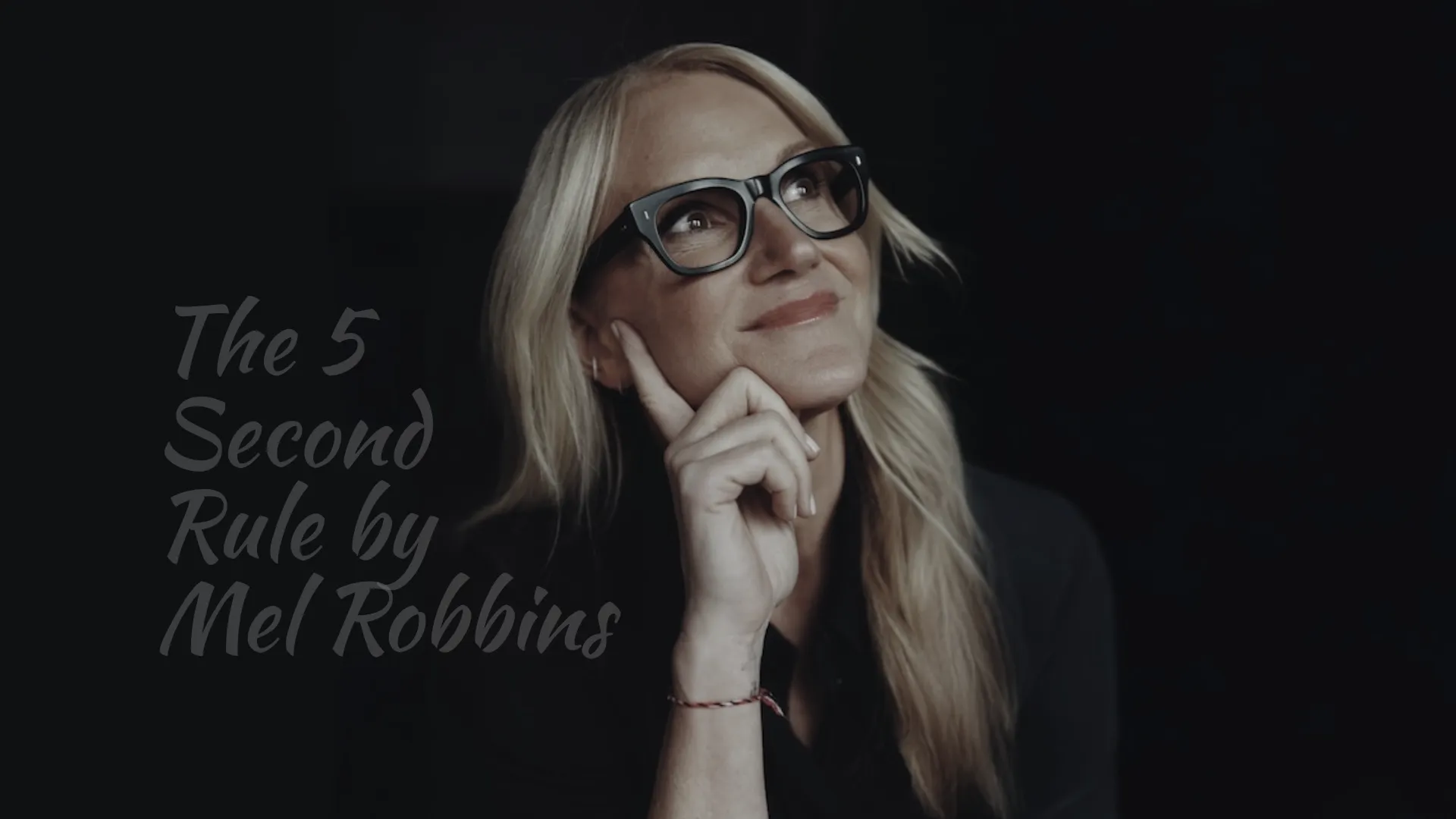
Take your time to study this the 5 second rule. We all need a framework like this to stand out in the already crowded speaking industry. Ask yourself, how can I adapt this to my message?
What Is Mel Robbins’ 5 Second Rule?
The five second rule Mel Robbins teaches is a simple mental tool that helps people take action before hesitation takes over. When you feel the instinct to do something you know is important, you count backward 5-4-3-2-1 and then physically move.
That is the entire rule.
It is not about motivation or positive thinking. It is about acting fast enough to beat overthinking. The rule was created by Mel Robbins, a bestselling author and TEDx speaker, as a practical way to stop procrastination and self-doubt.
Its power comes from simplicity. When you act within five seconds, you interrupt fear and build momentum.
How the 5 Second Rule Works in Plain English
The brain is designed to protect you, not push you toward growth. The moment you hesitate, your brain starts scanning for risk. That is when doubt, fear, and excuses show up.
The five second rule works by cutting that process short. Counting backward focuses your attention and creates a small window to act before fear gains control. Instead of debating with yourself, you move.
This is why the Mel Robbins 5 second rule works so well. It relies on timing, not willpower.
The 5-4-3-2-1 Method Step by Step
Using the 5-4-3-2-1 method follows three simple steps. First, notice the instinct to act. This could be the thought that you should start a task, speak up, get out of bed, or make a call. Second, count backward from five to one. Third, when you reach one, take a physical action.
The action can be small. Standing up, opening your laptop, or saying the first word is enough to break hesitation and start momentum.
The Science and Habit Loop Behind the Rule
Many habits, including procrastination and negative self-talk, operate on automatic loops. A cue triggers hesitation, hesitation leads to avoidance, and avoidance reinforces the habit.
The five second rule interrupts that loop. Counting backward shifts attention away from fear and back into the present moment. That pause gives you just enough space to choose action instead of reaction.
The science behind the 5 second rule supports the idea of pattern interruption. You are not eliminating fear. You are acting before fear decides for you.
Why Five Seconds and Not Three or Ten?
Five seconds is short enough to prevent rumination but long enough to make a conscious choice. Waiting longer allows the brain to activate what Mel Robbins describes as the emergency brake. That is when rationalizations and excuses appear.
Five seconds keeps the decision window open just long enough to move.
The Story Behind the 5 Second Rule
The origin of the 5 second rule came from a personal struggle. Mel Robbins was dealing with anxiety, financial stress, and low motivation. Even getting out of bed felt overwhelming.
One morning, she counted down from five and forced herself to get up. That single act helped her bypass hesitation. Over time, she realized the same countdown worked in other areas of her life.
What started as a personal coping tool became a widely used method after she shared it publicly.
From Getting Out of Bed to a Global Method
At first, the rule was only used in the morning. Later, Robbins applied it to work decisions, health habits, and moments that required courage. As more people used the method, similar results followed.
The rule spread because it was easy to remember, easy to repeat, and easy to apply under pressure.
How to Use the 5 Second Rule in Everyday Life
The five second rule works best when used often. It is not reserved for major decisions. It is meant for daily moments when hesitation shows up.
The more you practice it, the faster action becomes automatic.
Using the 5 Second Rule to Stop Procrastination
Procrastination thrives on delay. The moment you tell yourself you will start later, resistance grows. The five second rule stops that cycle by forcing an immediate start.
If you think you should begin a project, count 5-4-3-2-1 and open the document. You do not need to finish the task. Starting is enough to create momentum.
Using the 5 Second Rule for Anxiety and Overthinking
The 5 second rule for anxiety works by breaking mental loops. Counting backward redirects attention away from racing thoughts and into the present moment. Pairing the countdown with a simple physical action can help calm the nervous system.
This rule is not a replacement for therapy or professional support. It is a practical tool to regain control in everyday situations.
Building Confidence and Self Discipline With the Rule
Confidence is built through action, not waiting to feel ready. Each time you act despite discomfort, you create proof that you can trust yourself.
Using the five second rule repeatedly helps shift identity from someone who hesitates to someone who acts.
Why Speakers Need a Simple Framework Like the 5 Second Rule
This is where the lesson matters most for speakers.
The reason the 5 second rule spread so fast is not just because it works. It is because it is memorable. Five words. One countdown. One action.
Great speakers do not overwhelm audiences with ideas. They give them one clear framework people can remember, repeat, and use.
Audiences forget stories. They forget statistics. They forget long explanations. But they remember simple frameworks they can picture and practice.
The 5-4-3-2-1 method is sticky. It is easy to explain from a stage. It fits on a slide. It can be taught in under a minute. That is why it travels.
If you speak for a living, this is a critical lesson. You need a framework that is simple, catchy, and practical. Something your audience can recall days or weeks later without your slides.
When a framework is easy to remember, your message keeps working long after the applause stops.
What Speakers Can Learn From Mel Robbins’ Framework
Mel Robbins did not build her impact by adding more content. She built it by simplifying her message.
The framework has a clear name. It has a clear action. It solves a specific problem. It works across situations. That is the gold standard for a speaking framework.
For professional speakers, coaches, and trainers, this is a reminder that complexity does not create authority. Clarity does.
If your audience cannot explain your idea to someone else, the framework is too complicated.
The Book The 5 Second Rule by Mel Robbins
The method is fully explained in The 5 Second Rule. The book expands on the core idea with research references, personal stories, and practical examples.
You do not need to read the book to use the rule, but it shows how a simple framework can scale into a global message.
Benefits and Limitations of the 5 Second Rule
The biggest benefit of the 5 second rule is speed. It helps people act before fear takes control. Many users report less hesitation, better productivity, and stronger follow-through.
The limitation is that it is not a cure for everything. It works best when paired with skills, planning, and support systems. It is a starting tool, not the entire solution.
How the 5 Second Rule Compares to Traditional Motivation Advice
Traditional motivation advice encourages waiting until you feel ready. The five second rule rejects that idea. It teaches action first and lets motivation follow.
This focus on simplicity and speed is why the framework stands out and why audiences remember it.
How to Start Using the 5 Second Rule Today
Choose one small situation where hesitation shows up. The next time you feel the urge to act, count backward from five and move. Do not judge the outcome. Focus only on the action.
Practice this daily. Action will start to feel natural.
Final Thoughts
The five second rule by Mel Robbins works because it is simple, memorable, and actionable. It closes the gap between intention and action using timing instead of motivation.
For speakers, the bigger lesson is clear. A powerful message does not need to be complex. It needs to be clear, repeatable, and useful.
Count 5-4-3-2-1 and move. That is how ideas turn into action, both on stage and in real life.

0 Comments