
Estimated reading time: 6 minutes
Key Takeaways:
- Understanding the right structure is key to impactful speeches.
- Use Monroe’s Motivated Sequence for powerful persuasion.
- Capture your audience’s attention right from the start.
- Presentation delivery is as important as content.
- Practice makes perfect – rehearse your speech multiple times.
Table of Contents
- Why Mastering Motivational Speech Structure Matters
- Common Mistakes in Motivational Speeches
- The Science Behind Effective Structures
- Core Elements of Motivational Speech Structure
- Full Motivational Speech Structure Outline Template
- Real Examples of Motivational Speeches
- Tips for Delivering Your Motivational Speech
- Advanced Variations for Pro Motivational Speakers
Why Mastering Motivational Speech Structure Matters
You may feel like an outsider in the speaking world. But mastering the structure of a motivational speech can change that.
The right motivational speech structure builds your credibility. It gives your words the power to inspire and influence audiences. People need to feel your passion and understand your message. If you can deliver your ideas clearly, rejection turns into acceptance.
Common Mistakes in Motivational Speeches
Many speakers make the same mistakes:
- Failing to engage the audience from the start
- Not addressing the audience’s needs
- Overloading with information instead of focusing on key points
- Lack of transitions, making the message hard to follow
A strong structure helps you avoid these pitfalls. Clear organization keeps your audience interested from beginning to end.
The Science Behind Effective Structures
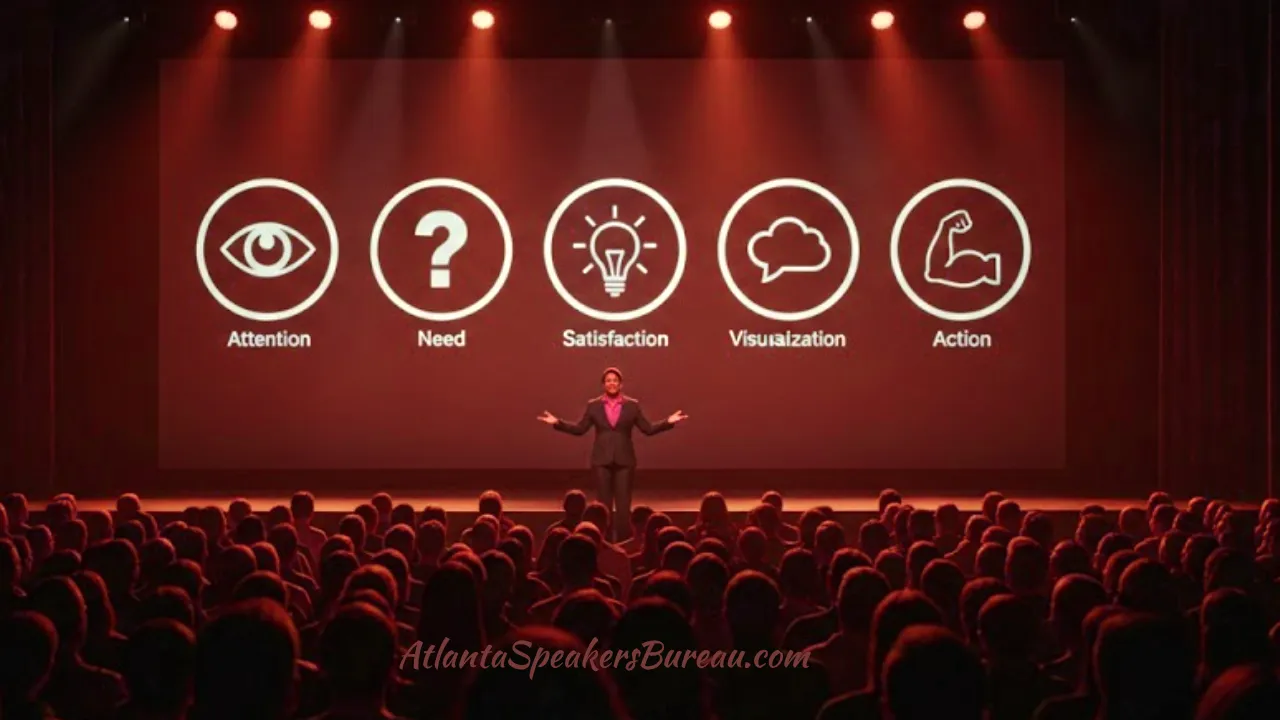
One effective structure you should master is called Monroe’s Motivated Sequence. This framework helps people understand your message by guiding them through five critical steps:
- Attention
- Need
- Satisfaction
- Visualization
- Action
Each step leads the audience closer to your call to action. If they follow you through these steps, they are more likely to take the action you want them to take.
Core Elements of Motivational Speech Structure
The best overall structure is Monroe’s Motivated Sequence, because it’s designed specifically to move an audience from attention to action in five clear steps.
1. Attention
Your first job is to snap the audience out of “autopilot” and make them feel this talk matters to them.
-
Use a vivid story, surprising statistic, bold claim, or rhetorical question.
-
Example: “What if I told you that one small habit you do every morning is quietly killing your biggest dreams?”
2. Need
Next, you highlight a problem or gap in their current situation so they feel genuine discomfort with the status quo.
-
Describe the problem in concrete, relatable terms.
-
Show consequences: stress, missed opportunities, damaged relationships, lost income, etc.
3. Satisfaction
Here you present your solution as a clear path out of that problem.
-
Explain what to do, step by step or in 3–5 simple points.
-
Show why it works, using brief examples, credibility, or quick evidence.
4. Visualization
You help the audience see and feel the impact of taking (or not taking) action.
-
Positive visualization: paint a vivid picture of life after applying your solution.
-
Optional contrast: briefly show what happens if they change nothing, then return to the positive future.
5. Action
You end with one specific, doable next step so the audience knows exactly what to do now.
-
Make the action concrete (sign up, commit to a habit, have a conversation, write a plan).
-
Keep it simple enough that they can start today, not “someday.”
You can think of it like this: grab their attention, make them feel the need, offer satisfaction, let them visualize success, and then drive them to action—a complete motivational arc in one structure.
Full Motivational Speech Structure Outline Template
Here’s your copy-paste ready motivational speech structure outline:
1. Attention Getter
2. Need
   - Audience Pain Points
3. Satisfaction
   - Your Solution
4. Visualization
   - Future with Your Solution
5. Action
   - Clear Call to Action
Real Examples of Motivational Speeches
Let’s look at some famous speeches that used this structure effectively. TED Talks are great examples. Many speakers start with a personal story to engage the audience, then dive into the need and solution.
Take a TED Talk about overcoming obstacles. The speaker shares their own journey first. They talk about the challenges they faced, which creates a strong emotional connection.
Then they present their solution and visualize the positive outcome. This approach encourages the audience to take action in their own lives.
Tips for Delivering Your Motivational Speech
Even the best speech needs a solid delivery. Here are some tips:
- Practice out loud. This makes a huge difference.
- Time yourself. Aim for a clear, concise presentation.
- Engage with your audience. Make eye contact and use gestures.
- Remember to breathe. It’ll help you stay calm and focused.
Your delivery can elevate your speech from good to great. Keep it authentic and passionate to connect with your audience.
Advanced Variations for Pro Motivational Speakers
Once you master the basics, explore advanced variations of motivational speech structures. Different audiences may respond better to different structures.
Consider hybrid structures that combine storytelling elements with the problem-solution framework. Tailor your approach based on what resonates with your specific audience.
FAQ
What is the best structure for a motivational speech?
Monroe’s Motivated Sequence (Attention, Need, Satisfaction, Visualization, Action) is proven for persuasion.
How do I create a motivational speech outline?
Start with a hook, define the problem, present your solution, paint a vision, and include a clear call to action. Use 3-5 main points with transitions.
Add stories, examples, or data to make each point memorable and emotionally engaging. Close by reinforcing the core message and reminding the audience what they stand to gain by acting now.
What is Monroe’s Motivated Sequence?
It’s a 5-step persuasive framework: Attention-Need-Satisfaction-Visualization-Action. Each stage is designed to guide your audience emotionally and logically from initial interest through to a concrete decision.
This makes it especially powerful for motivational speeches where your goal is not just to inform, but to inspire real change.
How long should a motivational speech be?
There’s no one perfect length for a motivational speech, but many effective talks for general audiences land in the 5–20 minute range, depending on the event and format.
Shorter speeches (around 5–10 minutes) are great for meetings, classrooms, or online videos, while longer keynotes (15–45 minutes) give you more space for stories, interaction, and deeper transformation.
Can I use a motivational speech template for beginners?
Absolutely. Using a motivational speech template for beginners is a smart way to organize your ideas and avoid feeling stuck or overwhelmed. Over time, you can customize the template with your own stories, style, and structure so your speeches feel natural and authentic.
What makes a motivational speech engaging?
A motivational speech is most engaging when it starts with a powerful hook, uses real stories and examples your audience can relate to, and speaks directly to their needs and emotions.
Clear structure, vivid visualization of a better future, and specific action steps at the end keep people listening and inspire them to actually do something with your message.
How does motivational speech structure differ from informative speeches?
Motivational speeches are designed to persuade and inspire action, using emotional appeals and structures like Need–Satisfaction–Visualization–Action to create urgency and hope.
Informative speeches, on the other hand, focus primarily on delivering clear facts, explanations, and understanding, without necessarily pushing the audience to change their behavior.

0 Comments